
Organized by:

Latest News
Kenya’s Flower Export Competitiveness: KQ Airfreight Subsidy Talks Meet A New Regional Agenda
Published: October 30, 2026
As Kenya prepares to showcase its flowers at IFTF 2026 in the Netherlands, Kenya Airways Chairman Kiprono Kittony has disclosed discussions with government and industry on subsidising airfreight. The development comes as Eastern Africa’s newly established horticulture council places logistics, affordable transport and trade facilitation at the centre of its regional agenda.

Kenya’s flower industry is heading into the International Floriculture Trade Fair (IFTF) in the Netherlands with a familiar concern hanging over its competitiveness: the cost of getting flowers to international markets. This time, however, there is a potentially significant development at home. Kenya Airways (KQ), the national carrier, has been discussing ways of making airfreight more affordable, including the possibility of a subsidy involving government and the industry.
The disclosure came from KQ Chairman Kiprono Kittony during the East African Coffee Markets Conference, where he spoke about the importance of international trade events in promoting Kenya’s export products. In citing IFTF, which takes place from November 3 to 5 at Expo Greater Amsterdam in the Netherlands, Kittony drew attention to Kenya’s participation in an important international platform for the flower trade.
His reference prompted a question about the national carrier’s support for the flower industry, particularly at a time when freight costs remain a major concern for exporters competing in international markets.
Kittony described the question as “very good and timely”. He then revealed that Kenya Airways, representatives of the flower industry and government had met the previous week to discuss the issue. Although he did not disclose the details or outcome of the meeting, he specifically referred to the possibility of subsidising airfreight.
He pointed to neighbouring Ethiopia as an example of how an airline can support the development of a national flower export industry, citing Ethiopian Airlines and its role in making cargo transport more accessible to flower exporters.
The disclosure is significant because it moves the conversation beyond the industry’s longstanding complaint about high freight costs and towards the possibility of a practical intervention involving the airline, government and exporters. It is not yet an announced subsidy programme or a concluded agreement, but the fact that the discussions have taken place is an important development.
A chairman with a direct connection to horticulture
Kittony’s position gives the discussion an added dimension. He chairs Kenya Airways and is also Chairman of Mount Elgon Orchards Ltd, the established horticultural enterprise in Kitale associated with Bob Andersen. The farm, founded in 1920, is among Kenya’s oldest horticultural businesses and has developed a substantial flower and avocado operation.
Mount Elgon Orchards has itself identified the uncompetitive cost of airfreight as one of the barriers affecting Kenya’s flower and avocado exports. Following a visit by Agriculture Cabinet Secretary Mutahi Kagwe, the company highlighted airfreight costs, regulatory burdens and delays in VAT refunds among the issues requiring attention.
Kittony also served as President of the Kenya National Chamber of Commerce and Industry (KNCCI) from 2014 to 2019. His experience in business leadership, horticulture and national trade advocacy gives his remarks particular relevance at a time when the industry is seeking solutions to the cost of doing business.
The question is no longer simply whether Kenya Airways can carry flowers. It is whether the national carrier can become a more active partner in strengthening the competitiveness of one of Kenya’s important export industries.
HoCEA gives the freight question a regional context
The discussions around Kenya Airways come at a particularly important moment for Eastern African horticulture. In September 2026, national horticulture associations from nine countries formally launched the Horticulture Council of Eastern Africa (HoCEA) in Nairobi, establishing a regional private-sector platform to address challenges that individual countries and businesses cannot resolve on their own.
The council’s formation followed consultations among national associations, with the groundwork taking shape at a regional meeting in Arusha, Tanzania, in November 2024. Its formal launch on September 22, 2026, took place alongside a Regional Public-Private Dialogue on Horticultural Logistics and Trade Facilitation, supported by TradeMark Africa.
HoCEA brings together national horticulture associations around a shared agenda covering trade, investment, market access, standards and competitiveness. Its priorities include trade facilitation and logistics, cold-chain infrastructure and trade corridors, digital trade and traceability, inclusive value-chain development, and climate resilience.
The logistics agenda is particularly relevant to the flower industry. High airfreight costs, inadequate cold-chain infrastructure, limited cargo capacity, fragmented trade processes and delays at borders and ports all affect the ability of producers and exporters to move time-sensitive products efficiently.
The council’s founding objectives also identify efficient logistics and market access as areas for collective action. Its approach is to work through national associations, bringing together industry players and engaging governments, regional institutions and development partners to address shared constraints.
This is an important shift in how the region approaches horticultural competitiveness. Rather than treating freight and transport challenges as separate national problems, HoCEA provides a platform through which associations can pursue common solutions, coordinate advocacy and encourage investment in the systems that connect farms to markets.
The Kenya Airways discussions therefore resonate with a wider regional agenda. A more affordable airfreight arrangement in Kenya would address an immediate concern for Kenyan exporters, while the broader challenge of efficient transport and logistics remains one that the region must tackle collectively.
Ethiopia’s experience offers a regional lesson
Kittony’s reference to Ethiopia is especially relevant within this emerging regional framework. Ethiopia is part of the wider HoCEA horticultural network, and its flower industry provides an important example of how close cooperation between producers, government and a national airline can support export development.
Research by Harvard University’s Growth Lab documents how the Ethiopian government facilitated cooperation between flower producers and Ethiopian Airlines. As the industry expanded, the airline moved beyond carrying flowers in the belly cargo space of passenger aircraft to leasing cargo planes to serve the growing export trade. Ethiopian Airlines continues to play a major role in transporting the country’s flowers.
A United Nations Conference on Trade and Development (UNCTAD) study also identifies airfreight charges as a major operating cost for Ethiopia’s cut-flower industry and documents the development of dedicated cargo capacity to accommodate exports.
The Ethiopian experience is not a ready-made formula that Kenya can simply reproduce. The structure of the two countries’ aviation and flower industries differs. It does, however, demonstrate the importance of aligning national aviation capacity with the needs of an export sector whose products depend on speed, reliability and temperature-controlled handling.
That is the wider lesson behind Kittony’s comparison: the competitiveness of a flower industry is influenced not only by what happens on the farm, but also by the transport systems and commercial arrangements that determine how efficiently flowers reach buyers.
IFTF: taking the conversation to the international market
The timing of the discussions is important. Kenya heads to IFTF 2026 in Vijfhuizen, the Netherlands, from November 3 to 5, joining international growers, breeders, buyers, suppliers and other players in the floriculture value chain.
The fair provides Kenyan exporters with an opportunity to engage buyers, strengthen commercial relationships and present the quality and diversity of flowers grown in the country. Kenya will be exhibiting alongside other major flower-producing countries, including Ethiopia and Uganda.
Yet international market access is only one side of the competitiveness equation. Exporters must be able to deliver flowers in the right condition, at the right time and at a cost that allows them to compete. The price of freight is therefore not a peripheral matter; it is part of the commercial calculation that determines what growers earn and what buyers are prepared to pay.
The emerging discussion between Kenya Airways, government and the flower industry presents an opportunity to address this challenge at a national level. HoCEA, meanwhile, offers the regional platform through which related concerns can be pursued across national boundaries.
The two developments are not the same initiative, and there is no indication that the Kenya Airways discussions have been concluded under HoCEA. Their significance lies in how closely they align: one is an emerging national response to the cost of airfreight, while the other is a regional effort to improve the movement of horticultural produce through more coordinated logistics, trade facilitation and investment.
As Eastern Africa positions itself as an integrated, competitive horticultural trade hub, the ability to move produce efficiently will be as important as the ability to grow it. Kittony’s disclosure has brought Kenya’s national carrier into that conversation at a moment when the region is beginning to organise around a common logistics agenda.
The question now is whether the discussions will translate into a workable arrangement that makes airfreight more affordable for Kenyan exporters—and whether the regional cooperation taking shape under HoCEA can help turn logistics from a persistent cost burden into a source of competitive advantage.
—
Written by Catherine Riungu, Hortinews / catherine@hortinews.co.ke
Chrysal presents new flower care solutions & services at IFTF 2026
Published: October 26, 2026
Chrysal, a global leader in flower care, will present Chrysal FreshGuard, the new Chrysal Amplify and its Chrysal Services portfolio at IFTF and the FloraHolland Trade Fair from 3–5 November 2026. These solutions help flower professionals protect quality, reduce losses and create greater flexibility throughout the supply chain.
From maintaining flower freshness during processing and retail to strengthening roses after harvest, Chrysal’s latest developments address practical challenges faced by growers, bouquet makers and retailers. Visitors can meet the team to explore how products, technical expertise and quality monitoring can support their businesses.
Chrysal FreshGuard: more time to sell
Longer floral supply chains place greater demands on flower quality and production planning. Chrysal FreshGuard is a conditioning solution that helps maintain water quality for longer, supporting flower freshness and visual appeal during processing and retail.
For bouquet makers, this offers greater flexibility to prepare orders in advance while maintaining consistent quality. For retailers, a longer effective display period creates more opportunity to sell flowers, helping reduce waste and protect category margins.
Chrysal Amplify: strengthen roses after harvest
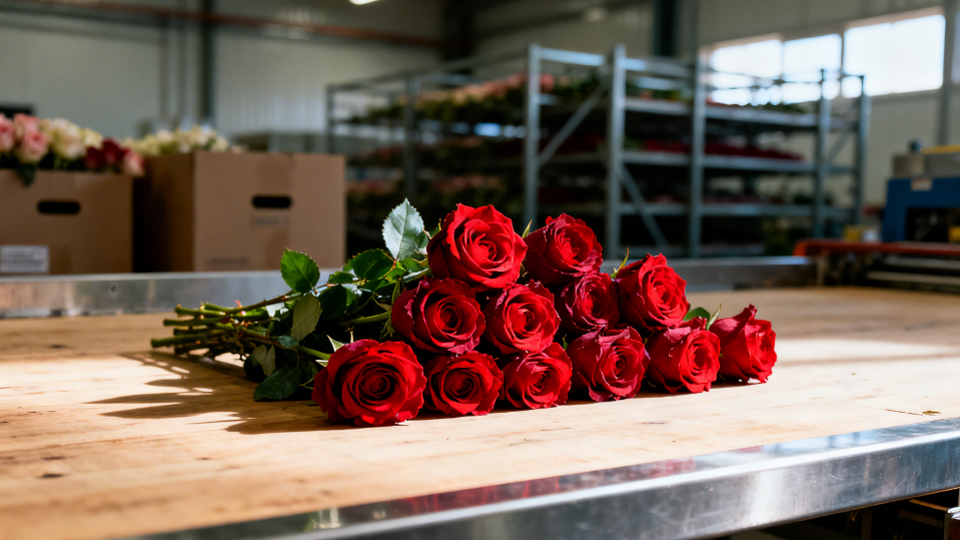
Chrysal Amplify is a new liquid post-harvest treatment for roses, developed to improve flower quality starting at the grower. Its technology delivers calcium that cut flowers absorb quickly, helping strengthen cell walls and support the integrity of cell membranes.
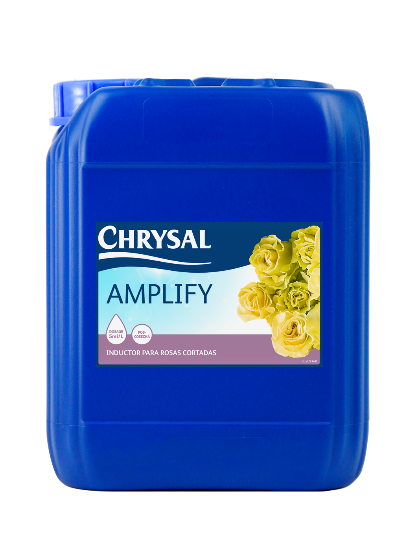
By strengthening stems and flowers from within, Chrysal Amplify helps maintain flower quality and vase life and reduce losses throughout the supply chain. Visitors can discuss application options with Chrysal’s experts and explore the possibilities of a trial.
Chrysal Services: expertise beyond the product
Protecting flower quality requires the right products, supported by consistent handling and well-managed processes. Chrysal Services brings together specialised post-harvest treatments, technical support, digital tools, monitoring and training to help customers improve performance throughout the flower chain.
The portfolio includes Rose Dip Service, Sea Freight Service and Long Storage, alongside technical consulting, digital services, care and handling training, vase life evaluations and audits. These services help customers address challenges such as Botrytis, extended transport times and fluctuations in demand. Recommendations are tailored to customers’ flowers, facilities and processes.
Meet Chrysal at FHTF and IFTF 2026
Visit Chrysal from 3–5 November 2026 at the FloraHolland Trade Fair, stands 1.44 and 1.45 and at IFTF, stands E2.14 and B1.29. Discover the latest developments, discuss your flower care challenges and explore what Chrysal’s products and services could mean for your business.
IFTF 2026 welcomes more flower growers than ever before
Published: October 22, 2026
From the Colombian booths to pavilions from Kenya, Ethiopia, Uganda, and Zimbabwe, this year’s fair in Vijfhuizen has more growers on board than ever.
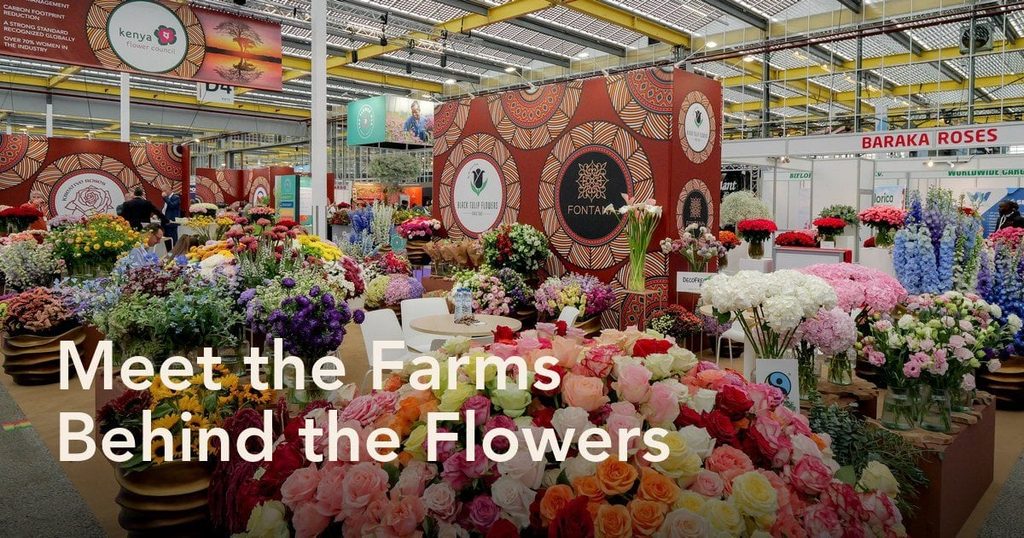
IFTF 2026, the International Floriculture Trade Fair, opens at Expo Greater Amsterdam in Vijfhuizen, the Netherlands, from November 3 to 5, 2026. For this 17th edition, organizer HPP Exhibitions welcomes more flower growers than ever before. The IFTF 2026 exhibitor list already includes 290 companies from nearly 30 countries, giving buyers a broad choice of farms, breeders, and service companies across five halls under one roof.
Ecuador, Kenya, and Colombia alone account for more than 140 of those entries. Add the pavilions of Ethiopia, Uganda, and Zimbabwe, plus breeders, cargo companies, and technology suppliers, and you have every reason to block three days on your calendar.
Why Visit IFTF 2026 as a Flower Buyer?
IFTF is first and foremost a growers’ fair. Importers, wholesalers, florists, and retail buyers travel to Vijfhuizen to meet the farms they already buy from, and the ones they would like to buy from, ahead of the new selling season. Conversations at the stands cover new varieties and vase life, but just as often freight, certification, packaging, and prices.
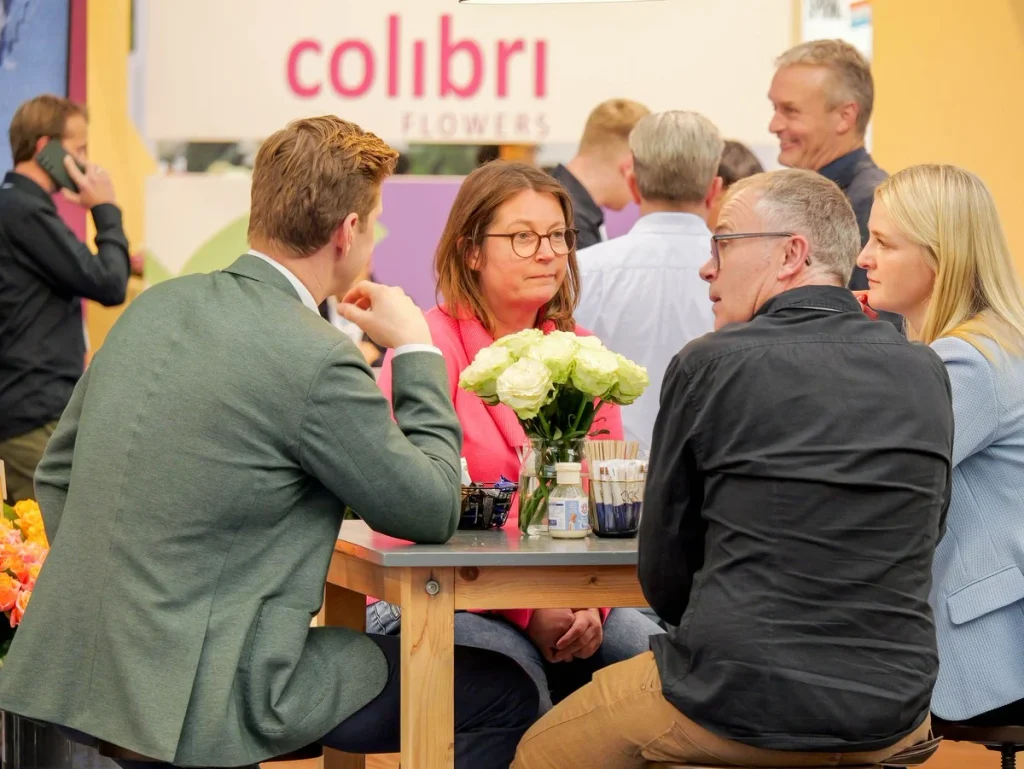
The 2025 edition showed how international the audience has become. According to HPP Exhibitions, total attendance passed 24,000, and more than 8,500 visitors came from outside the EU, an all-time high. The timing also helps: Trade Fair Aalsmeer by Royal FloraHolland runs on the same dates, so visitors can easily combine both events in one trip.
“This all here feels like I’m in a candy shop,” Victoria Clemson, Creative & Operations Director of the Daniel Ost Group, said during her visit to IFTF 2025.
Colombia Returns With Flowers of Colombia
The Colombian corner is back. Under the banner Flowers of Colombia, the Colombian flower exporters’ association Asocolflores brings together eight Colombian growers and two cargo agencies on nearly 120 m2 at stand B1.18. The slogan, “Diversity that inspires,” matches the assortment of chrysants, roses, carnations, callas, and foliage. On the shared stand, visitors will find Capiro, known for its chrysants and hortensias, carnation specialists Geoflora and Colibri Flowers, SB Talee, and Inverpalmas.
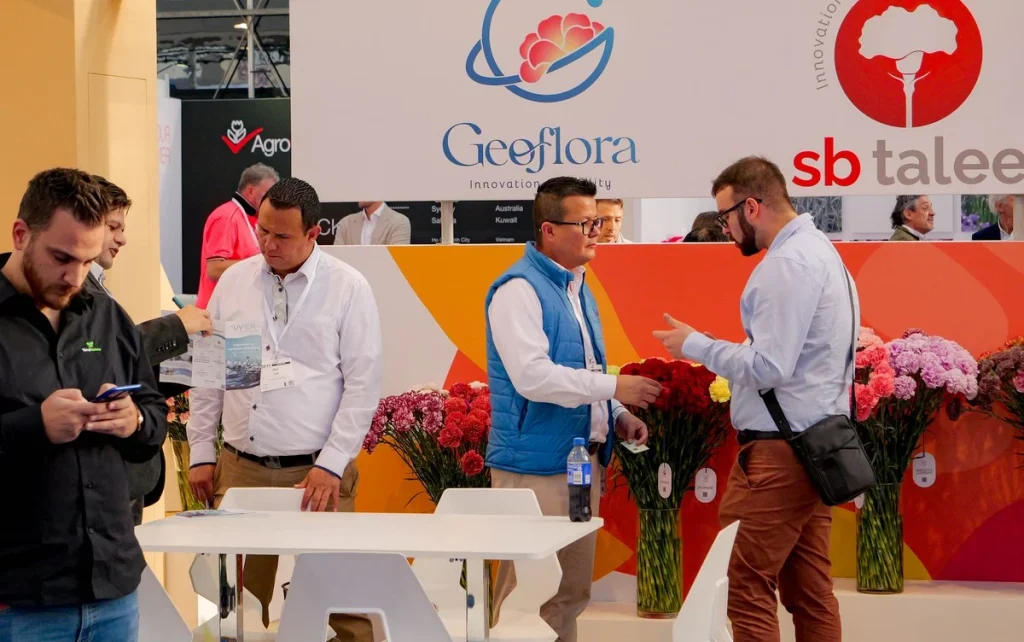
Geoflora and SB Talee, both part of the Flowers of Colombia stand in 2026, at IFTF 2025.
More Colombian growers have their own stands throughout the halls, including Alexandra Farms, La Gaitana Farms, The Elite Flower, and Fillco Flowers. At the German Import Promotion Desk (IPD, B4.20), San Francisco Gardens presents Colombian Hydrangeas.
Ecuador Brings the Biggest Group of IFTF 2026 Exhibitors
No country has more entries than Ecuador, with 68. Expoflores, the association of Ecuadorian flower producers and exporters, hosts a national pavilion at stand D4.14 with nine other exhibitors, most of them rose farms. Well-known growers such as Rosaprima, Hoja Verde, Tessa, Esmeralda Farms, and Josarflor have their own stands. For buyers looking for long-stem roses, garden roses, or new colors, it is a rare chance to compare dozens of farms in a single afternoon.
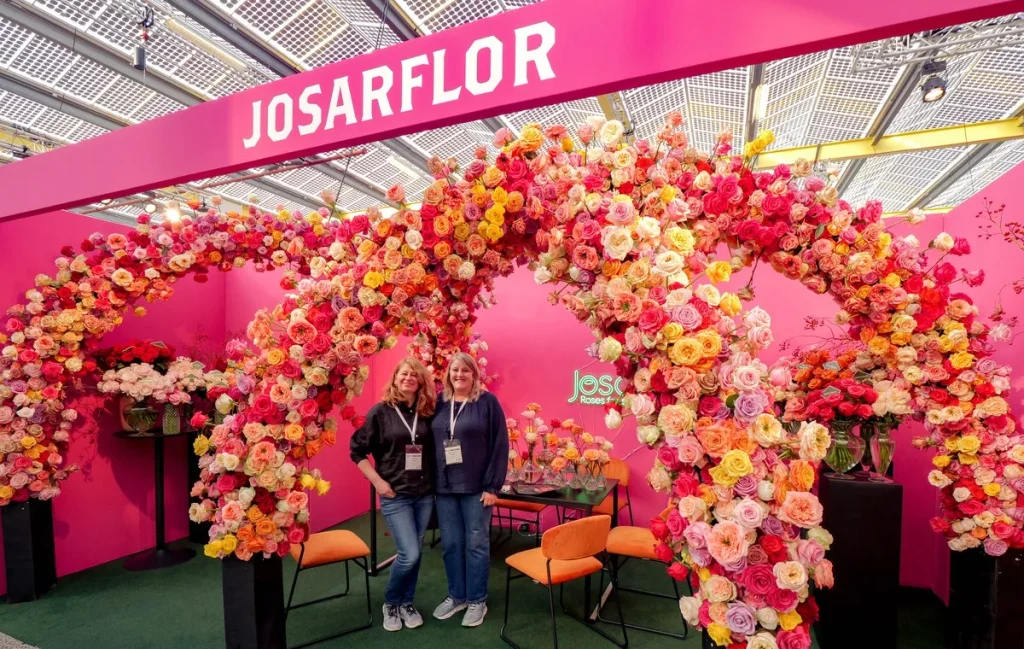
The rose arch on the Josarflor stand at IFTF 2025.
Kenya, Ethiopia, and Growing African Pavilions
Kenya
Kenya follows with 47 entries. The Kenya Flower Council, the association of Kenyan growers and exporters, is at stand D4.01, close to a long row of Kenyan rose and summer flower farms. Visitors will find Fontana and Black Tulip Group, P.J. Dave, Mount Elgon Orchards, and Wildfire Flowers, among many others. Kenyan growers on the IPD stand add Hypericum, kangaroo paw, Eryngium, Limonium, and Craspedia.
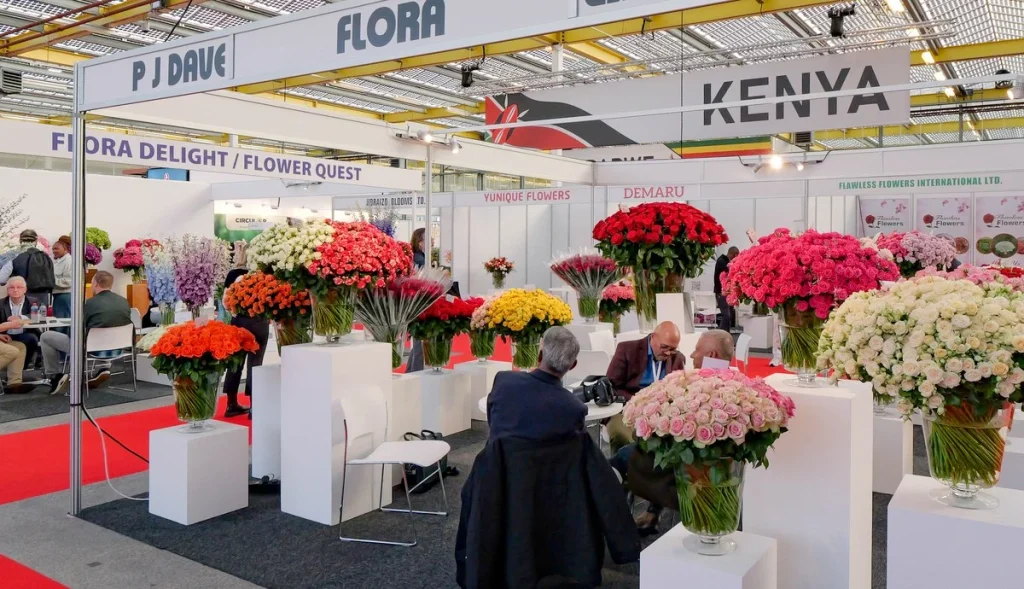
Ethiopia
EHPEA, the Ethiopian Horticulture Producer Exporters Association, is represented again at stand C3.02. Ethiopian growers such as Tinaw Flowers, Tana Flora, Roshanara Roses, Bellaflor Group, Hansa Flowers, and Qualirosa (Friendship Flowers) exhibit nearby.
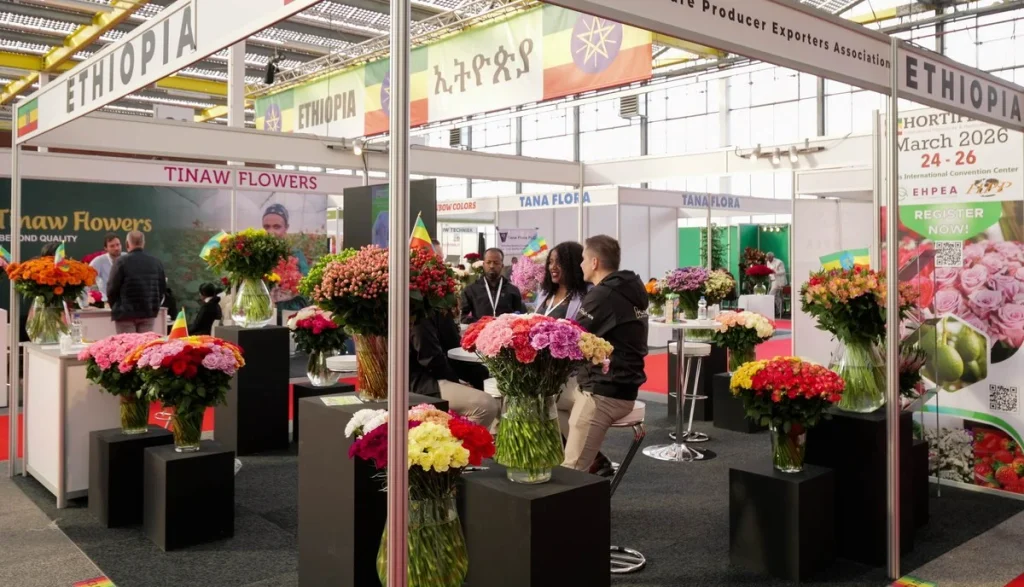
Uganda, Zimbabwe, and More
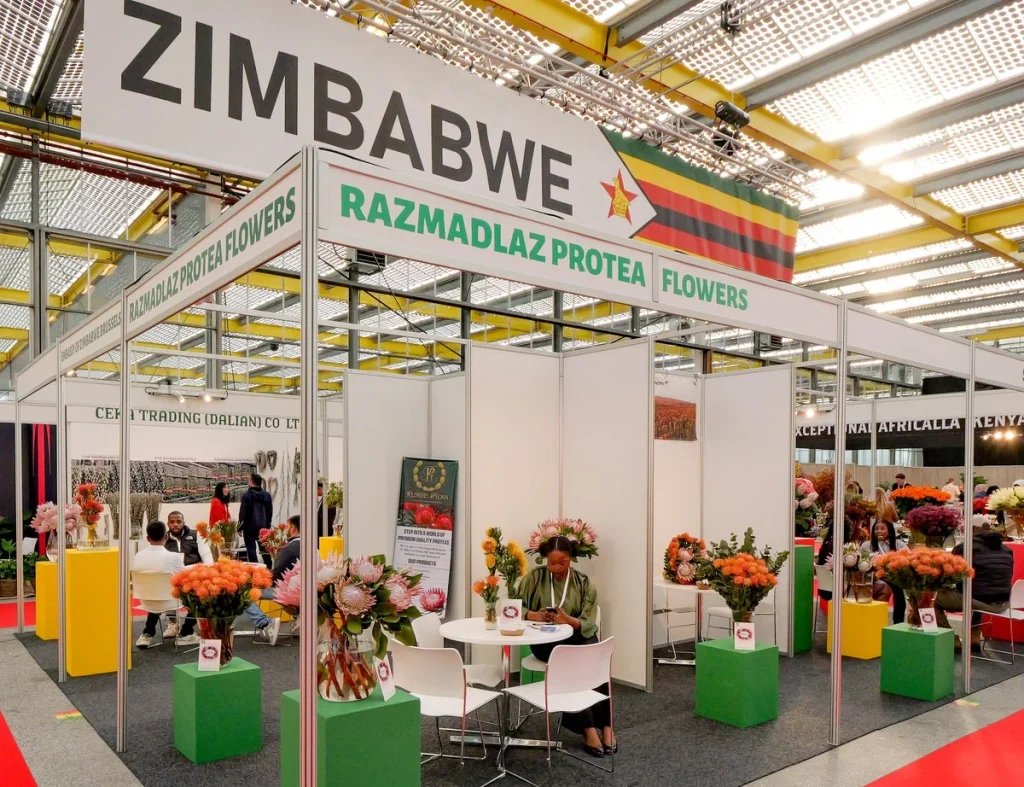
The African lineup keeps widening. Uganda, which brought its first national pavilion to IFTF in 2024, returns with the Uganda Flower Growers Pavilion (C4.26), with Rosebud among the exhibitors. Zimbabwe, which had its own pavilion in 2025, is back with the Zimbabwe Flower Growers Pavilion (C2.24), including Razmadlaz Protea Flowers and Sahara South. FIRCA from Côte d’Ivoire, Bella Inc. from Rwanda, and South African Protea growers Bosjes and Nikwaflora complete the picture.
Breeders, Cargo, and Technology in the Same Halls
Growers are the heart of IFTF, but they are not alone. Rose breeders Kordes Roses, Rosen Tantau, Meilland, and NIRP International exhibit, as do De Ruiter, Könst Alstroemeria, United Selections, and Royal Van Zanten. Air France KLM Martinair Cargo, Turkish Cargo, LATAM Cargo, and Kuehne + Nagel will discuss the farm-to-market route. From Asia, the Japan Flowers and Plants Export Association and KFlower, the Korea Floriculture Agricultural Cooperative, join the lineup.
Plan Your Visit
IFTF 2026 is open on Tuesday, November 3, and Wednesday, November 4, from 10:00 to 18:00, and on Thursday, November 5, from 10:00 to 17:00. The fair is for trade professionals only, and visitors must be 16 or older. Every visitor registers individually for an entry badge via the IFTF visitor registration page.
Thursd at IFTF
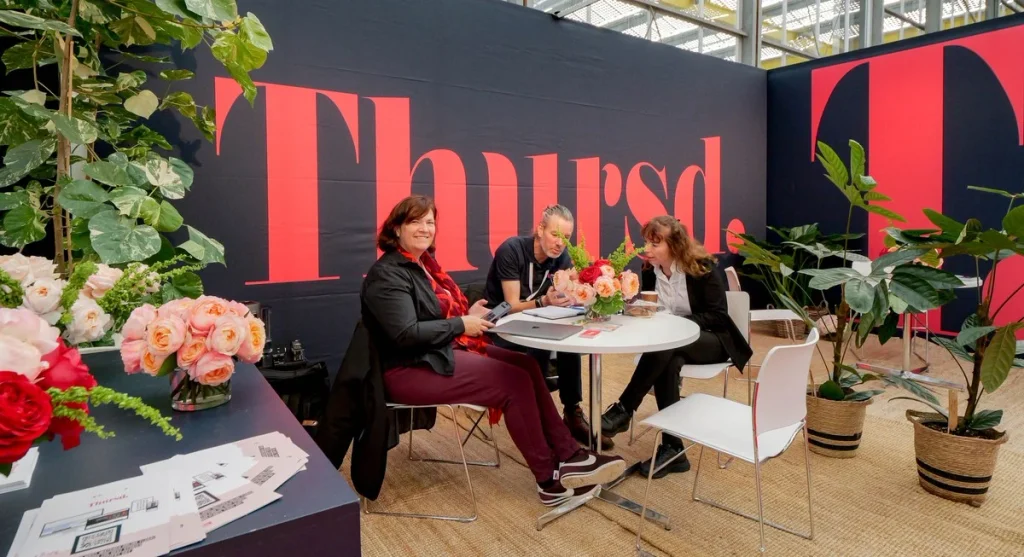
Thursd will be at stand C1.07 throughout the fair. On Wednesday, November 4, at 16:00, Caroline Nederpelt and Thursd host The Future of Floral Marketing LIVE, an open conversation about what floral marketing needs next. An hour later, the Import Promotion Desk holds its networking event at stand B4.20, where 17 growers from Colombia, Ecuador, Kenya, and South Africa present their flowers.
With more growers than ever, from the Andes to the East African highlands, IFTF 2026 is the place to put faces to the farms behind the flowers before the next season starts. For the bigger picture of the fair, its halls, and HPP Exhibitions’ other events, read The Floral World Will Meet Again at IFTF 2026.
–
Source: Thursd.
The Floral World Will Meet Again at IFTF 2026
Published: July 20, 2026
The International Floriculture Trade Fair returns to Vijfhuizen from November 3 to 5, 2026, inviting exhibitors and visitors to join three days of flowers, business, and direct conversation. Organized by HPP Exhibitions, IFTF brings the international floriculture industry together at Expo Greater Amsterdam in the Netherlands.
This is what you need to know to block your calendar this November.
Three Days When the Flower Industry Comes Together
The 17th edition of IFTF will once again become a temporary home for the international flower industry. The floral world will unite, bringing together breeders, growers, exporters, importers, wholesalers, buyers, logistics specialists, suppliers, associations, and service companies in five halls under one roof.

This is where the world literally meets to talk flowers and the topics that determine how the industry moves forward. A conversation may begin with a new rose, chrysanthemums, lily, carnation, or summer flower variety and continue into vase life, production planning, market demand, freight, certification, packaging, or doing business across borders.
Previous editions have shown how international this meeting has become. Across the exhibition halls, professionals from Europe, Africa, North and South America, Asia, and the Middle East meet in one place. For three days, people working in different parts of the flower chain can exchange ideas, develop partnerships, and see what is happening in markets far beyond their own.

Flowers Are the Starting Point
Walking through IFTF is a quick way to understand what is happening across international floriculture. Breeders present genetics and new varieties. Growers show products from different climates and production regions. Buyers can see, touch, and compare flowers instead of judging them only from a screen or a specification sheet.
Around those flowers is the system needed to move them from farm to florist. Previous editions have included logistics and cold-chain companies, packaging suppliers, technology developers, certification organizations, trade associations, and businesses working on quality control and traceability.
Sustainability, water use, production efficiency, freight, market access, and product presentation are all part of the same conversation. The fair makes it possible to discuss these subjects directly with the people who work with them every day.
Country pavilions and international exhibitor groups also give visitors a practical overview of different production regions. A walk through the halls can take visitors from Dutch and European companies to growers and organizations from Kenya, Ethiopia, Colombia, Ecuador, Japan, China, India, and many other flower-producing countries.

An Invitation to Exhibit at IFTF
For exhibitors, IFTF offers three concentrated days to put products, services, and people in front of an international professional audience. A stand is a place to introduce varieties, strengthen existing relationships, meet new buyers, discuss distribution, and explain what makes a company relevant to the market.
It is also an opportunity to have conversations that are difficult to reproduce online. Buyers can ask detailed questions. Growers can speak directly with breeders and suppliers. Logistics partners can discuss routes, handling, and delivery requirements with the companies that depend on them.
A short meeting at IFTF may open the door to a product trial, a new market introduction, a distribution agreement, or a longer commercial partnership.
Want to meet the international flower trade in one place? Reserve your stand for IFTF 2026 and make Vijfhuizen part of your commercial calendar.

An Invitation to Visit IFTF
For visitors, IFTF is useful because so many different parts of the flower chain are present in one place. Florists can discover flowers and varieties that may soon reach their wholesalers. Buyers and traders can compare suppliers and assortments. Growers can explore genetics, technology, packaging, logistics, and professional services.
Visitors should prepare a few appointments in advance, but also leave room in their schedules. Some of the most useful meetings begin unexpectedly: at a product display, inside a country pavilion, during a conversation in an aisle, or after an introduction by a mutual contact.
Register as a professional visitor, bring your questions, and use the three days to find new products, new contacts, and a clearer view of where the flower industry is heading.

Source: Thursd.
IFTF 2025 Impression
Published: November 18, 2025
IFTF Brought the Global Flower Industry Together Once Again
Published: November 11, 2025
Visitors and exhibitors from every continent met in Vijfhuizen to exchange ideas, explore new varieties, and build lasting partnerships. This year’s edition of IFTF welcomed more international trade visitors than ever before. More than 8,500 attendees came from countries outside the EU, an all-time high, while almost an equal number arrived from countries within the EU. Together with the Dutch visitors, the total number of attendees at the IFTF Trade Fair exceeded 24,000.

Every year in the first week of November, the global floriculture community gathers in the Netherlands. It’s a moment when growers, breeders, exporters, and buyers from all over the world meet under one roof. From November 4-6, the International Floriculture Trade Fair (IFTF) in Vijfhuizen formed the beating heart of the global flower business.
The Netherlands at the Heart of Global Floriculture
IFTF clearly took the international spotlight. Spread over five halls, it’s where the global floriculture network connects. From Europe to Africa to North and South America and Asia, almost every continent was represented. Visitors could walk through stands from the Netherlands, Italy, and France to Kenya, Ethiopia, and South Africa to Colombia, Ecuador, Chile, and the USA to Japan, China, and India – a true journey through the world of flowers within a single day.
Many Roses at IFTF, but What’s the Science Behind the Fragrance of Roses?
The scent of roses does more than please the senses; it affects the brain and body in subtle but measurable ways. Scientifically, rose fragrance contains compounds such as phenylethyl alcohol and geraniol, which are known to activate the limbic system, the part of the brain that regulates emotion and memory. Studies have shown that inhaling rose scent can help reduce stress, lower heart rate, and even improve sleep quality by promoting a feeling of calm and safety.

“Fragrance travels directly to the emotional center of the brain, bypassing rational thought. It’s memory and feeling in its purest form, a gentle reminder of beauty, connection, and balance. The fragrance of roses releases dopamine and serotonin, the so-called “happiness hormones.” Beyond chemistry, there’s a reason we associate the smell of roses with love and comfort.” — Joey Azout, President of Alexandra Farms.
Extraordinary Flowers That Shape Floristry
At IFTF, you quickly see that floristry is much more than roses. Tropical flowers bring structure and strength: Anthurium, Strelitzia, Heliconia, bold shapes that hold space in any design. Summer flowers like Delphinium, Campanula, and Cosmos add lightness and movement, that natural rhythm we all love. Japanese varieties stand for refinement. Lisianthus, Gloriosa, Nerine, and Chrysanthemum show how precision and beauty can go hand in hand. And Lilies, strong and symbolic, continue to reinvent themselves. The most beautiful Ranunculus, Anemones, and Poppies. Orchids, in all their glory, Marigolds, Anigozanthes, Alstroemerias, Rosehips, and many more… Together, these flowers keep floristry diverse and dynamic. They remind us that every shape, texture, and origin adds a new way to express emotion through design.
“This all here, feels like I’m in a candy shop. Wow, how all the roses look, and so many special flowers. I obviously love it! I saw these lang and beautiful stems of Anigozanthes, just amazing. I have to get them to Saudi-Arabia. And how the Asters look, so airy and transparant. Just amazing how all these varieties here are shown at their best. I enjoyed from minute one.” — Victoria Clemson, Creative & Operations Director, Daniel Ost Group, Riyadh.

Not only are fresh flowers showcased at IFTF, but also a lot of tinted flowers in bold colors and designs. And preserved collections, too. One of those is Verdissimo.
“For many event designers, the real challenge isn’t creativity, it’s time and labour. Large installations and floral structures often demand long hours of preparation and on-site setup. That’s where preserved flowers and greens can make a real difference. They reduce the need for constant conditioning, save valuable working hours, and can be reused for future events. It’s not only a practical solution, but also a sustainable one: keeping beauty alive longer, while giving designers more freedom to focus on the story they want to tell.” — Ole Faarbaek Jensen, CEO Innovaflora – Verdissimo
Building Connections and Showcasing Innovation
The atmosphere was distinctly international yet familiar. Professionals met each other on the exhibition floor and in the stands, sharing ideas, discovering innovations, and renewing business friendships. The focus was not only on trade but also on connection. In a world that keeps changing, the IFTF remains a place where growers, breeders, and buyers understand that progress happens together.

For many companies, especially those from abroad, the IFTF was an opportunity to showcase their latest varieties to the Dutch and global markets. The Netherlands continues to play a central role as the trading hub of the floriculture world. Being visible here matters – it’s where the year’s conversations begin, partnerships form, and trends emerge. Everyone who counts in floriculture knows that presence at IFTF is simply part of the business.
It is well possible that after 23 hours of exhibiting hours, you still lacked time to see everything. The fair was not just about showing the beauty of floriculture, but also a place to meet with old and new friends.
Stronger Together – Now and in the Future
Beyond the impressive displays, both events underlined a shared message – floriculture is stronger when connected. The industry thrives on personal contact, shared goals, and mutual trust. Whether you’re discovering a new rose variety, negotiating export partnerships, or simply catching up with old friends, the spirit of these fairs lies in unity and exchange.
As the fairs closed their doors once again, it was clear that the global floriculture community remains alive and growing. From the energy on the exhibition floor to the ideas sparked in conversations, the Netherlands proved once more why it stands at the center of this colorful, ever-evolving world.
Next year, the IFTF will again open their doors from November 3-5, 2026. Until then, the connections made and ideas exchanged in Vijfhuizen will continue to shape the future of floriculture.

Source: Thursd.
Beware of attendee list scams and unofficial exhibiting listings!
Published: November 27, 2018We would like to alert you to the presence of “unofficial” companies that are actively approaching attendees and exhibitors with offers to publish, purchase or order exhibitor/attendee lists from IFTF. It is unfortunate that some past participants have become victims of these deceptive practices.
We want to emphasize that HPP Exhibitions, the organizer of IFTF, does NOT provide visitor contact details to any third parties. Therefore, we strongly advise against responding to these requests, as these companies do not possess the genuine attendee list and are attempting to scam you.
Please remain cautious and vigilant when dealing with any communication regarding attendee lists. Protect your personal information and be wary of unsolicited offers that may compromise your security.
If you have any concerns or questions, please reach out to the official IFTF organizers directly. Your trust and safety are our top priorities, and we are committed to ensuring a secure and successful event for all participants.
Beware of possible hotel fraud
Published: November 27, 2018There are ‘unofficial’ companies aggressively pursuing attendees/exhibitors to book discounted hotel rooms through their company. Unfortunately, some past attendees/exhibitors have fallen prey to these companies and have either:
- Been relocated with little or no warning
- Lost their significant deposits
- Not had the guest rooms they thought they had booked
- Not had the hotel they thought they had booked
- etc.
This has caused great hardship to these companies and individuals. Reservations made through an agency will be at your own risk. We advise you to book directly with hotels and not through a third party.
Such companies should be avoided, as there are no agencies affiliated to HPP Exhibitions, other than those mentioned on our website!
Exhibition Hours
Tuesday Nov. 3, 2026
10:00 hrs. - 18:00 hrs.
Wednesday Nov. 4, 2026
10:00 hrs. - 18:00 hrs.
Thursday Nov. 5, 2026
10:00 hrs. - 17:00 hrs.
Venue Address
Expo Greater Amsterdam
Stelling 1
2141 SB Vijfhuizen
The Netherlands
Phone: +31-23-5660140
Contact Info
HPP Worldwide
P.O. Box 625
1000 AP Amsterdam
The Netherlands
Phone: +31-20-6622482
Email: info@hpp.nl
Organized by:
Sponsored by:
Media Partners


© 2026 HPP Worldwide, All rights reserved.